Jazz Above Zakopane: A Week at Kalatówki
There are places where music seems to belong more naturally than elsewhere.
Kalatówki is one of them.
The hotel, situated in the Tatra mountains, sits above Zakopane and can be reached from Kuźnice by a walk through the forest. From the restaurant and the café you can watch the cable cars making their slow journey towards Kasprowy Wierch. And while Kalatówki certainly are a definition of serene getaway, for one week every September, the hotel becomes something else entirely.
A jazz retreat since 1959
The first Jazz Camping took place at Kalatówki in 1959, at a moment when jazz in Poland meant rather more than a musical genre.
During the earlier part of the 1950s, jazz had occupied an uneasy place in official culture. By the end of the decade, however, Poland was experiencing a cultural opening, and jazz had become one of its clearest expressions. It represented modernity, curiosity and, perhaps above all, a certain idea of freedom.
Into the mountains came an extraordinary collection of young musicians and artists.
Among them were Krzysztof Komeda, Andrzej Trzaskowski, Jerzy “Duduś” Matuszkiewicz, Jan Ptaszyn Wróblewski, Wojciech Karolak and Zbigniew Namysłowski, alongside figures from film, photography and the wider artistic world, including Roman Polański and Marek Karewicz.
The event was not conceived in quite the same way as a modern music festival. There was no procession of tightly scheduled artists arriving to perform a set and disappear backstage. The point was that everyone was there together. They stayed in the hotel, talked, skied, argued, ate, drank and played.
The music emerged from that.
A second Jazz Camping followed in 1960, after which the event disappeared for decades. It was revived in 1997 through the efforts of Marta Łukaszczyk together with Małgorzata and Zbigniew Namysłowski. Namysłowski, who had been one of the young musicians at the original gathering, became one of the central figures of its later life.
Not quite a festival
Jazz Camping has always retained a slightly different character from a normal concert series.
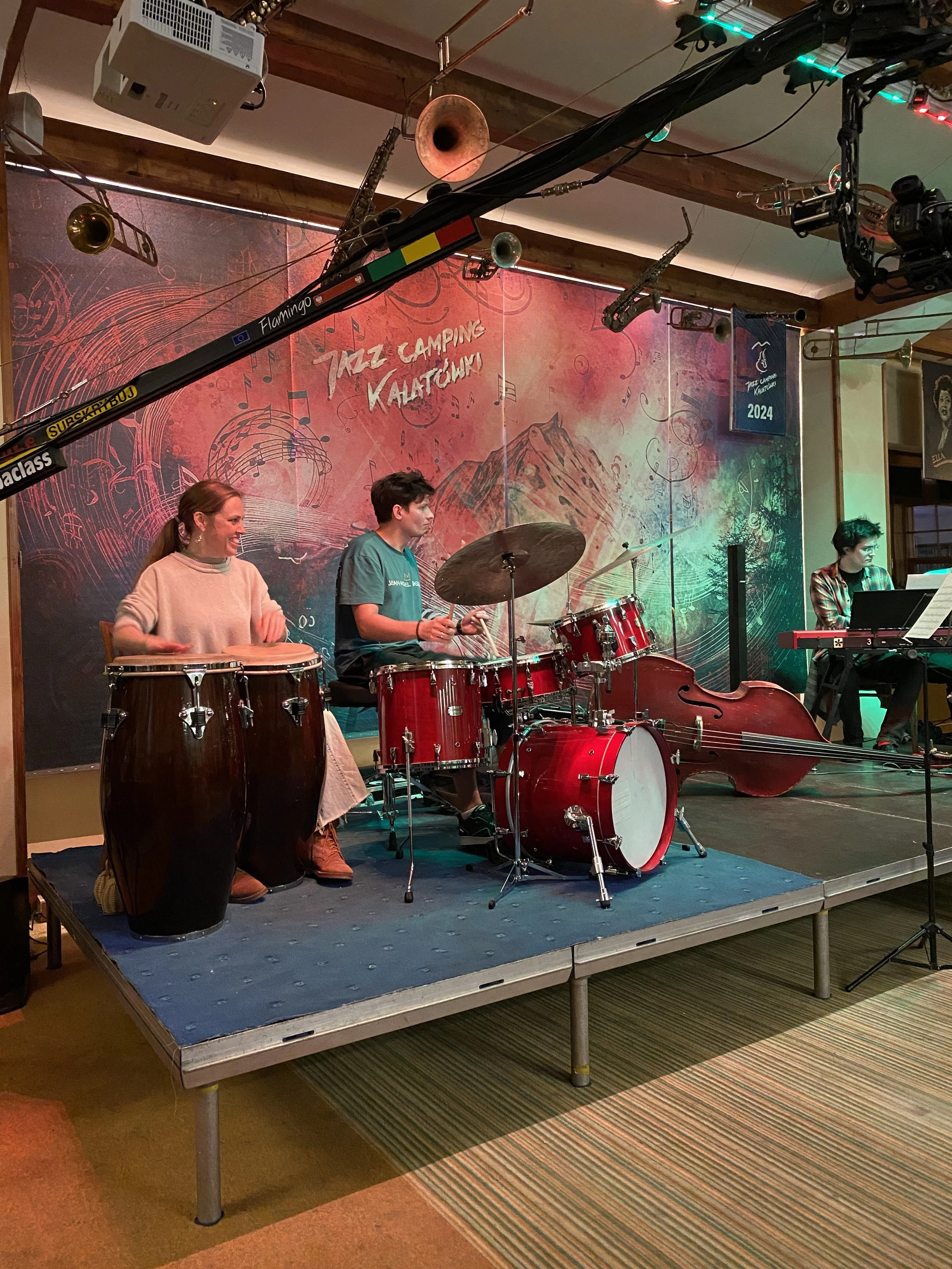
Its organisers describe spontaneous playing as central to the event: musicians meet in jam sessions, conversations continue around the music, and the boundary between performer and audience becomes unusually porous.
That description is accurate, but it is difficult to appreciate until you are actually there. The same person you watched playing the previous night may be sitting at breakfast the following morning. Someone appears with an instrument in the afternoon. Musicians who ordinarily work in completely different contexts suddenly find themselves sharing a stage.
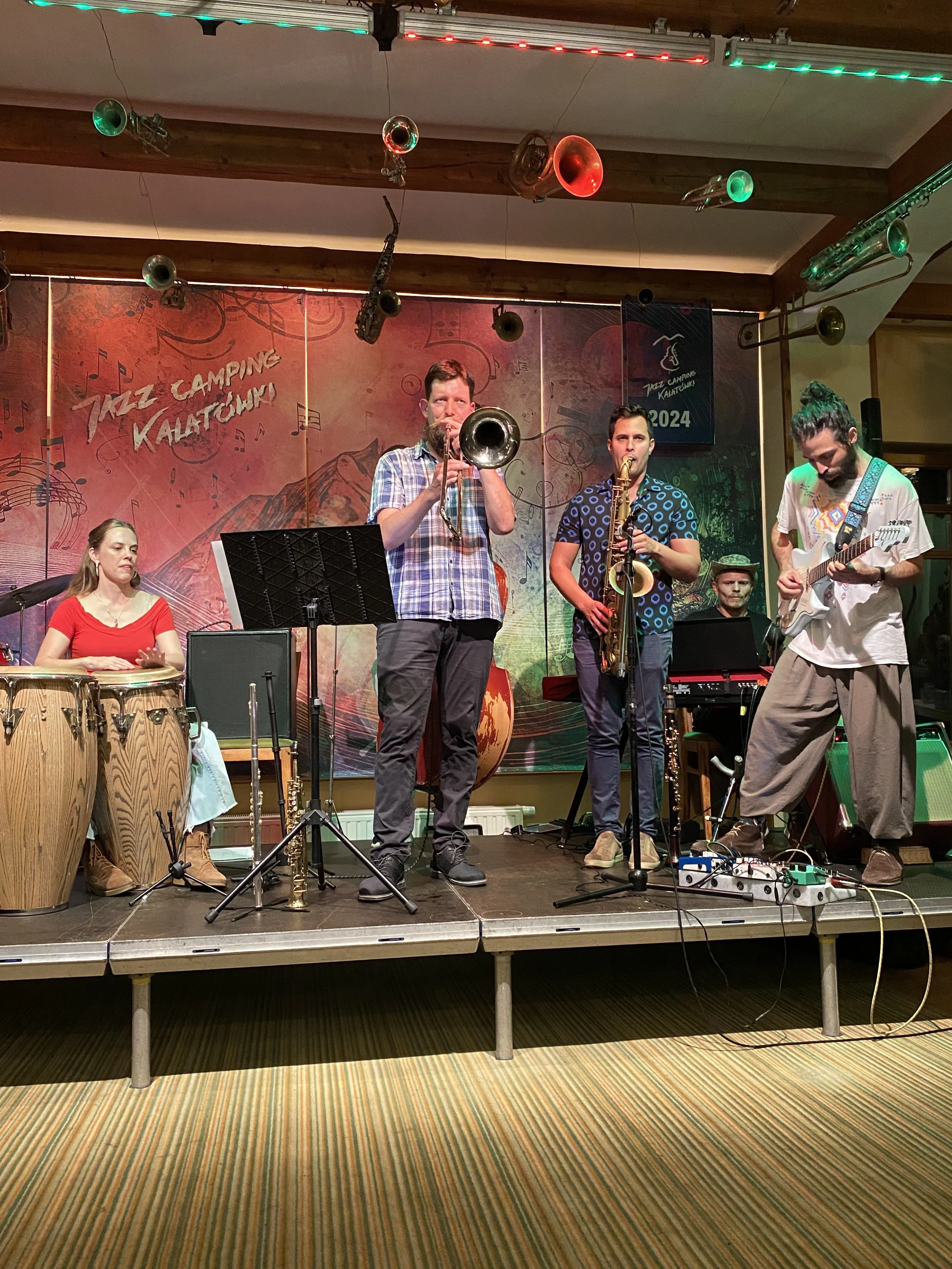
The 2024 edition ran from 22 to 28 September and included evenings devoted to Jazz i Górale, Latin jazz, a musical encounter with Witkacy, open jam sessions and W to mi graj, the gathering dedicated to the memory of Zbigniew Namysłowski. Musicians came from Poland and further afield, including New Orleans percussionist Michelle Welchons, Israeli guitarist Shachar Elnatan and Cuban clarinettist and saxophonist Joaquin Sosa.
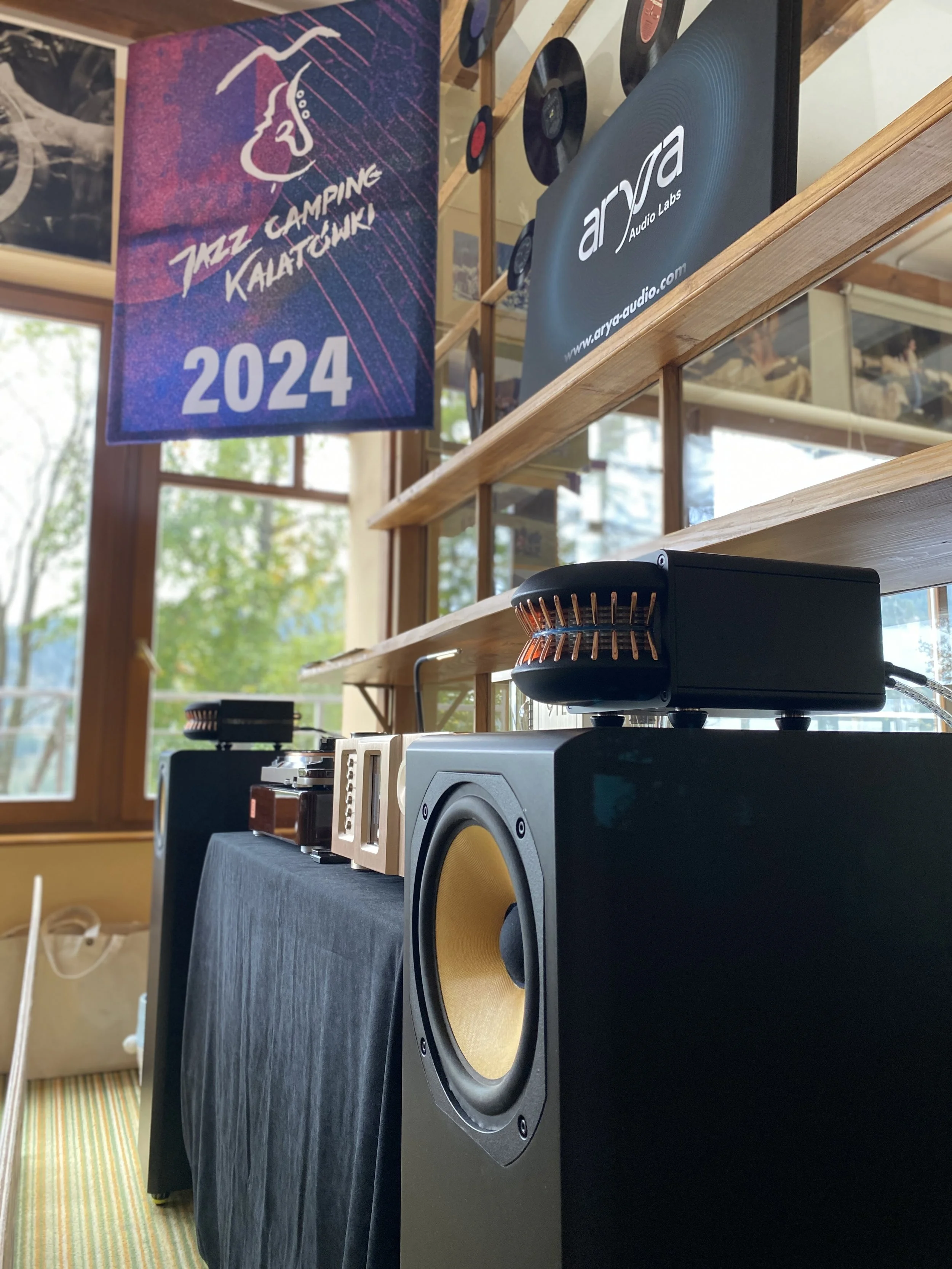
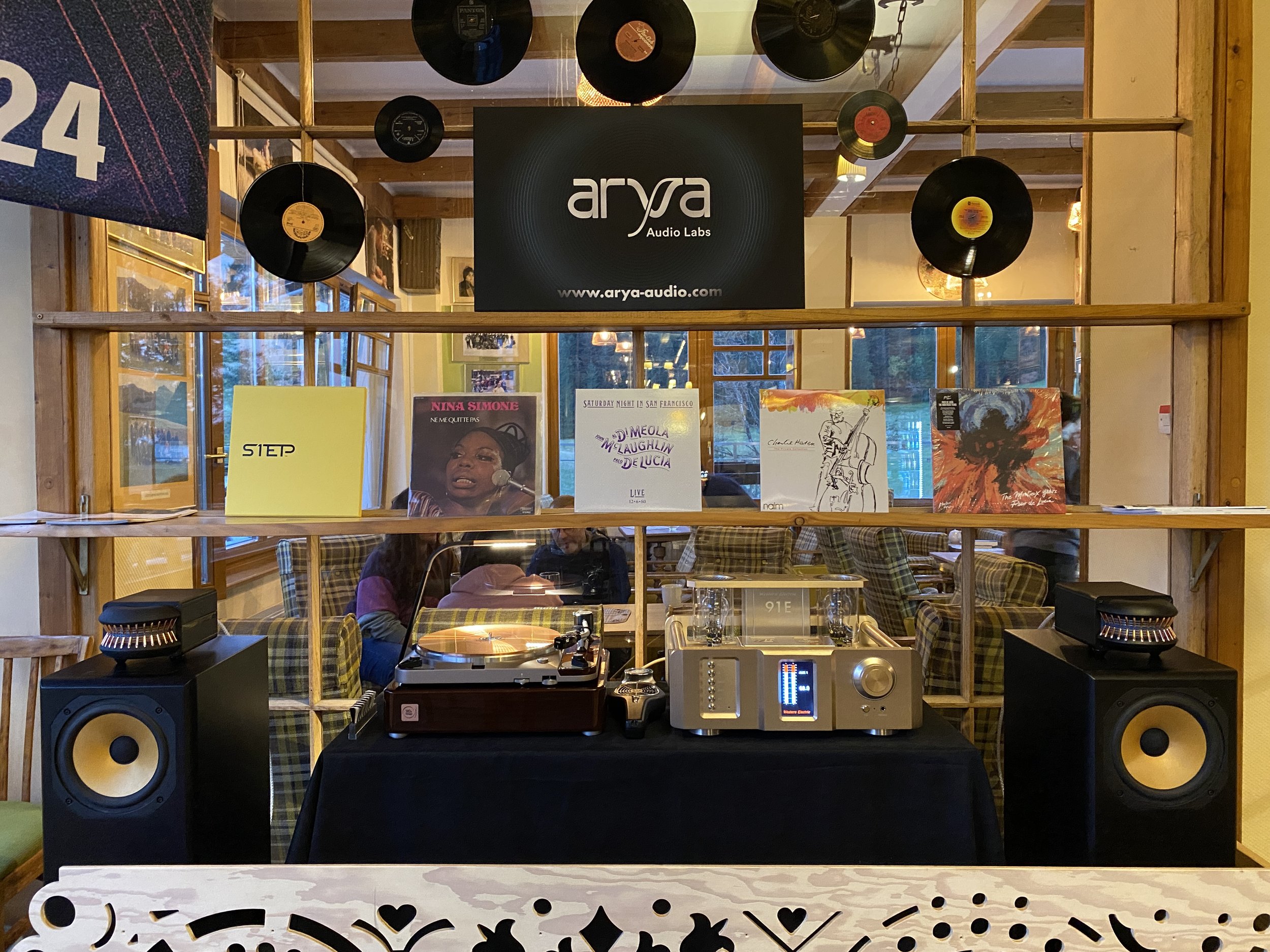
Bare Baffle joined the event as a sponsor and exhibitor. Our system occupied the main café - a room with perhaps one of the best views an audio system was ever paired with.
The room during the day
The evenings belonged entirely to the musicians.
During the mornings and afternoons, however, the main café became a listening room.
It is difficult to imagine a less conventional setting for an audio demonstration. One wall opens visually onto the mountains, people come and go with coffee. Instruments wait for the evening.
In the middle of all this, we played records.
The system we brought was deliberately simple.
We used a custom loudspeaker incorporating the Arya Audio Labs AirBlade as its actual high-frequency driver - not as an auxiliary supertweeter added to an existing speaker, but as an integrated part of the design.
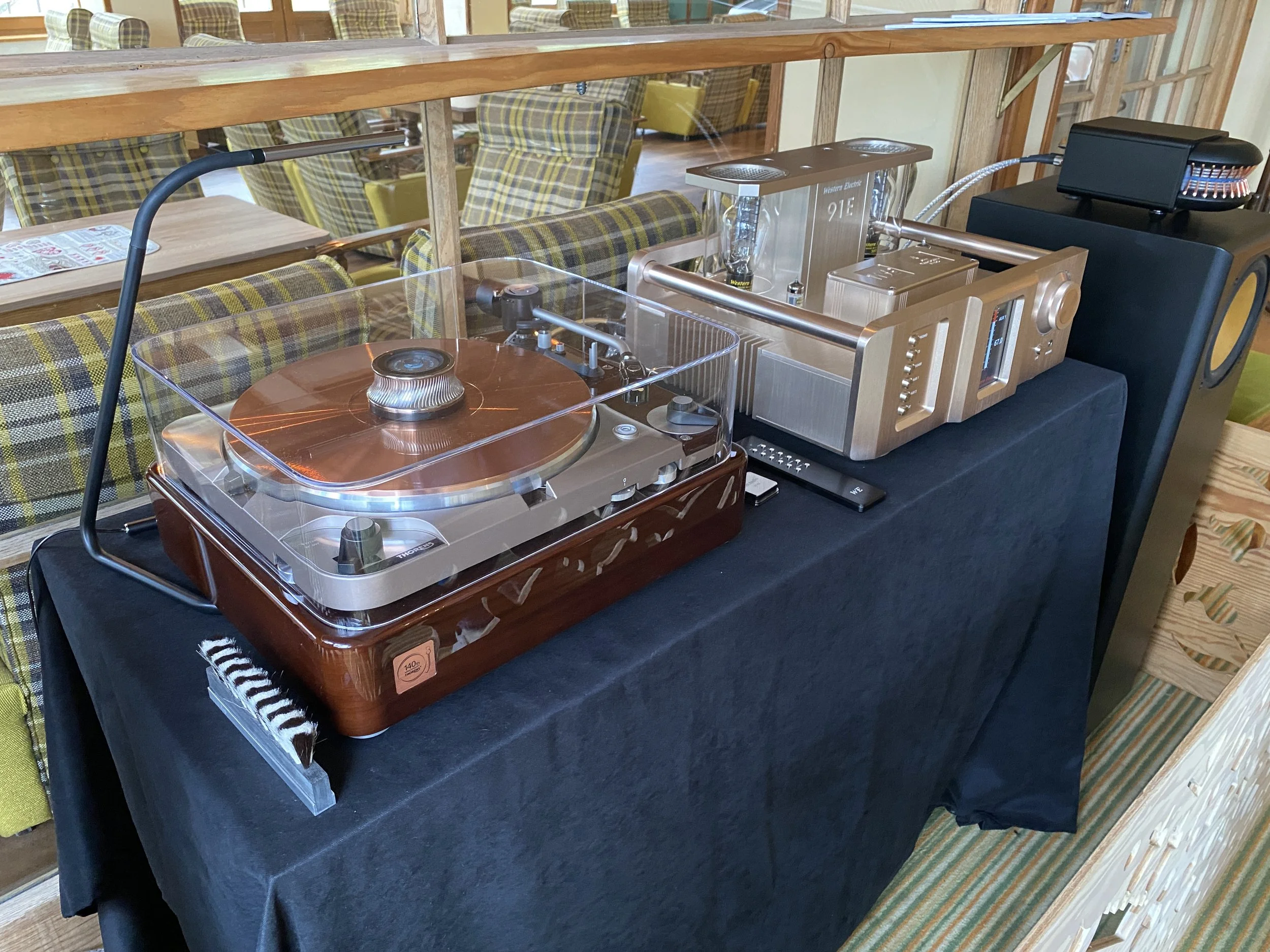
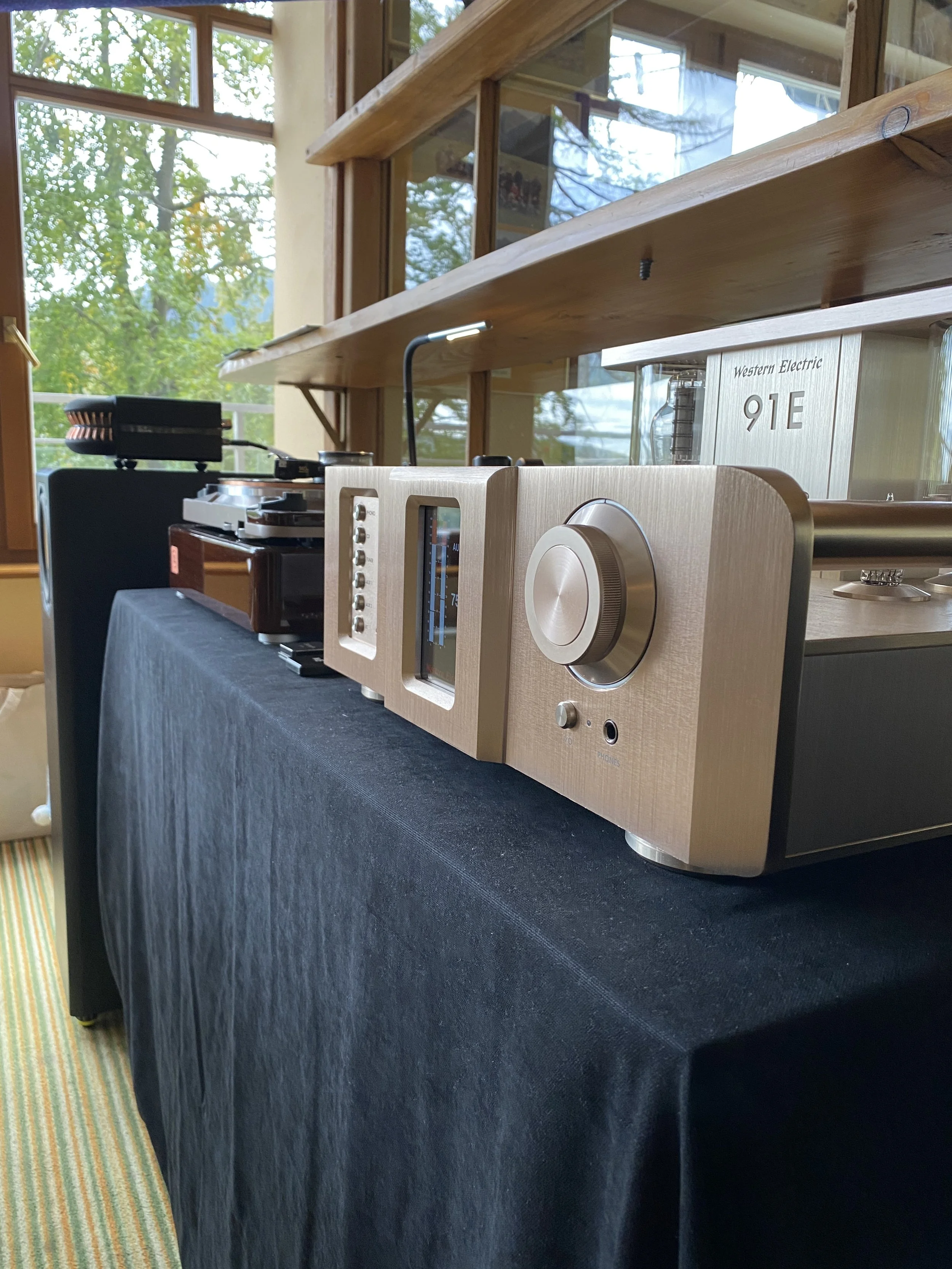
Amplification came from a Western Electric 91E, which made an unusually appropriate centrepiece for the system. Because it incorporates the power amplifier, preamplifier and phono stage in a single chassis, the rest of the installation could remain very simple. The setup was completed with the Thorens TD 124 DD 140th Anniversary turntable and accessories from Arya Audio Labs - RevOpods and Orbius.
And that was essentially all we needed. That simplicity was important. Kalatówki did not feel like the right place to construct a monument to audio equipment. We wanted to complement the music that already existed within its walls.
Before the microphone, after the microphone
There was also something rather fitting about having a Western Electric amplifier there.
The lineage of the 91E reaches back to the Western Electric 91A of 1936, originally developed through Western Electric's film-sound subsidiary ERPI for cinema sound systems. Those systems belonged to the formative period of electrically reproduced sound, when engineers were learning how to make a performance produced elsewhere appear convincingly inside another room.
Two years later, in 1938, Western Electric introduced the 300B power triode. Today it is treated almost reverentially by sections of the hi-fi world, but its original life was considerably less glamorous: it was an industrial component hidden away inside professional sound equipment.
The modern 91E deliberately references that earlier Type 91 lineage, which meant that, almost ninety years after the original 91A appeared, one of its descendants found itself sitting in a mountain hotel in polish mountains while jazz musicians wandered past it carrying saxophones.
We liked that because Jazz Camping itself contains the same curious overlap of old and new as the Western Electric brand.
The bigger picture
Working in high-end audio inevitably changes the language in which you talk about music.
We spend an enormous amount of time trying to make reproduced music feel less reproduced. We begin discussing transient behaviour, directivity, harmonic structure, dynamics, spatial information, dispersion and decay.
All of these things matter but Kalatówki, every evening, provided the original reference again. Real instruments, real musicians and the wonder of people playing together in the same room, and every evening was a very direct reminder of why we do this in the first place.