
 Image 1 of 3
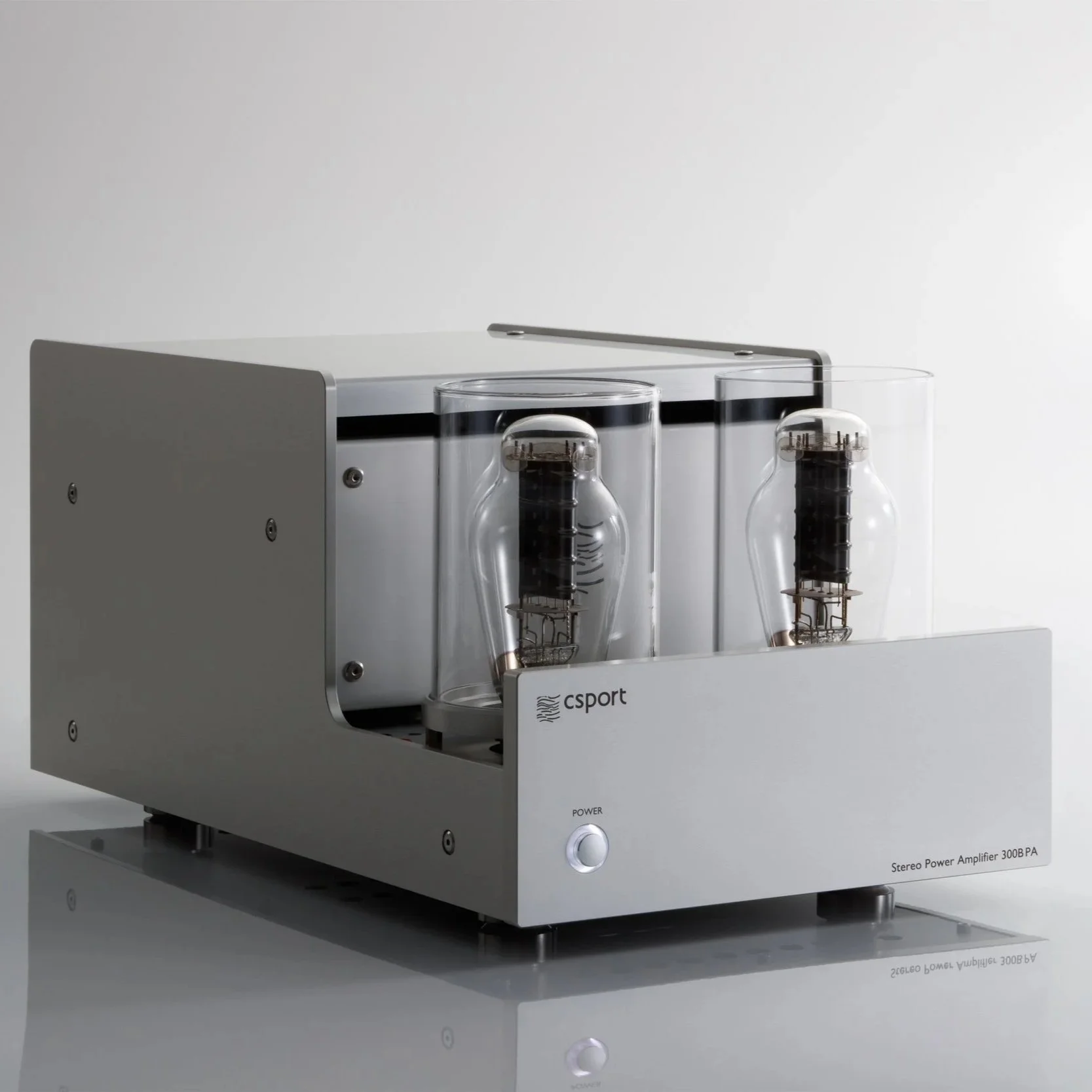 Image 2 of 3
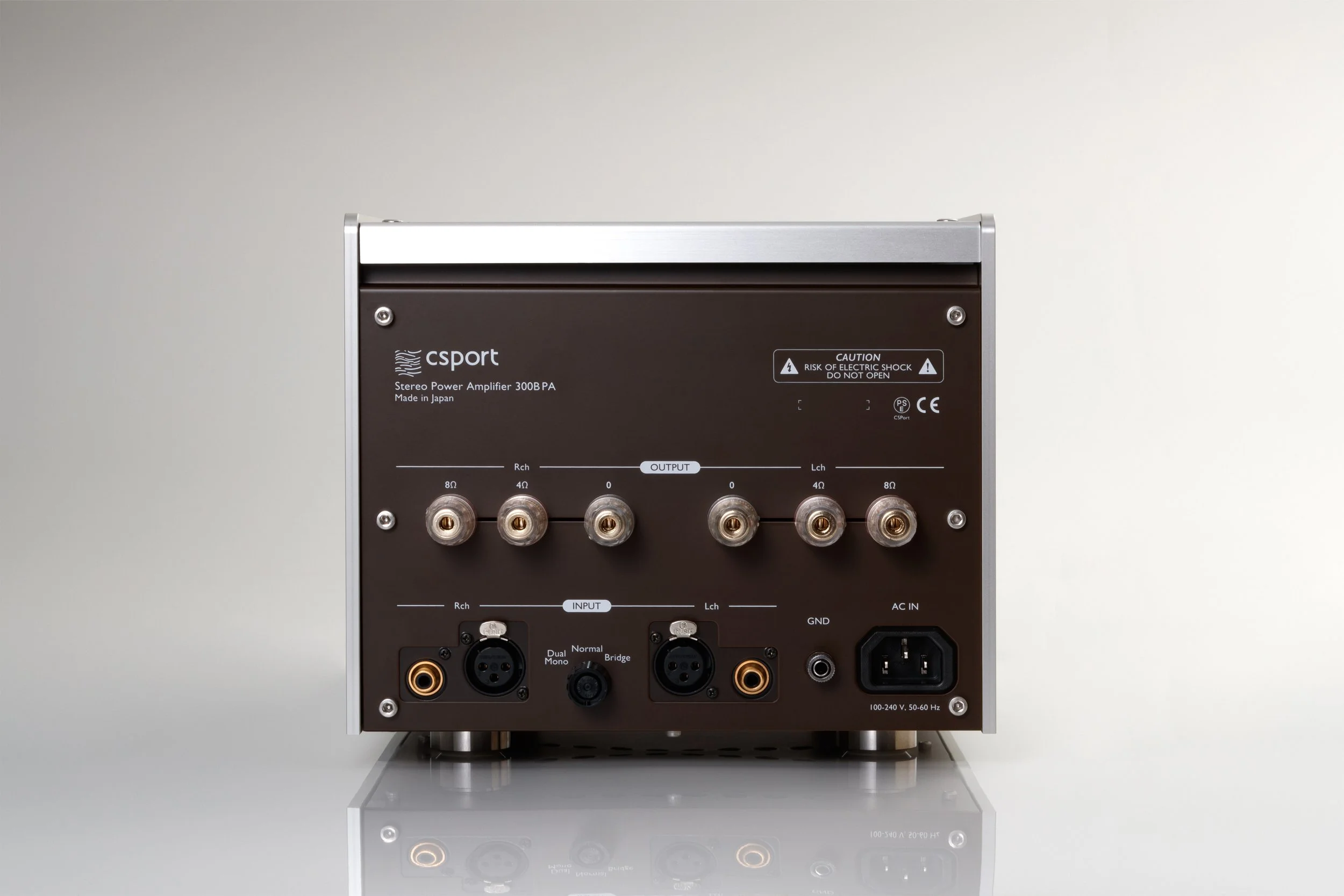 Image 3 of 3
Two-stage amplification. No negative feedback.
9W per channel from the classic 300B or 20W in bridged mode.
About the 300B PA
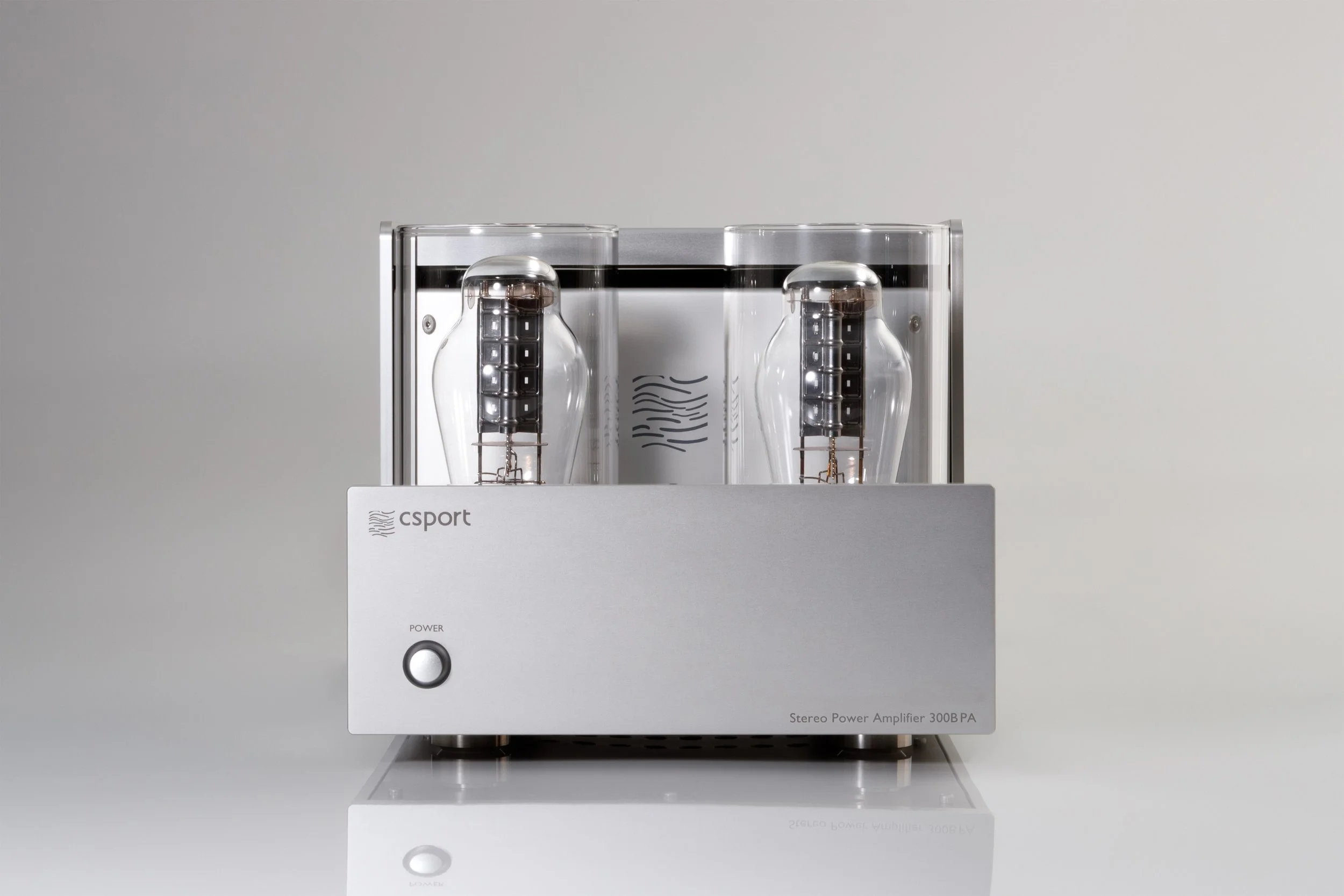
The CS Port 300BPA is a Class A stereo power amplifier combining directly heated 300B output triodes with C3g drivers and the Japanese manufacturer’s proprietary power-supply engineering.
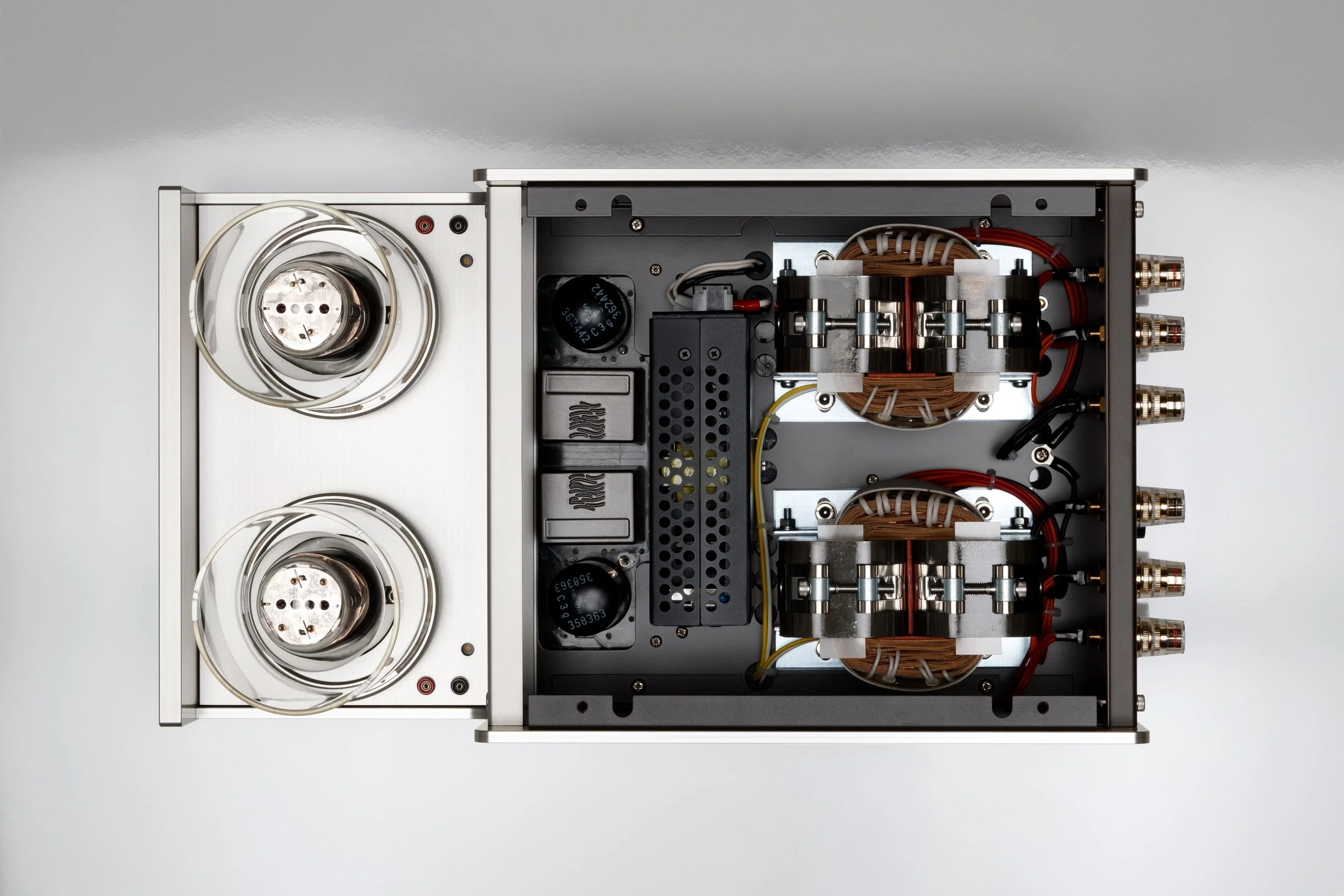
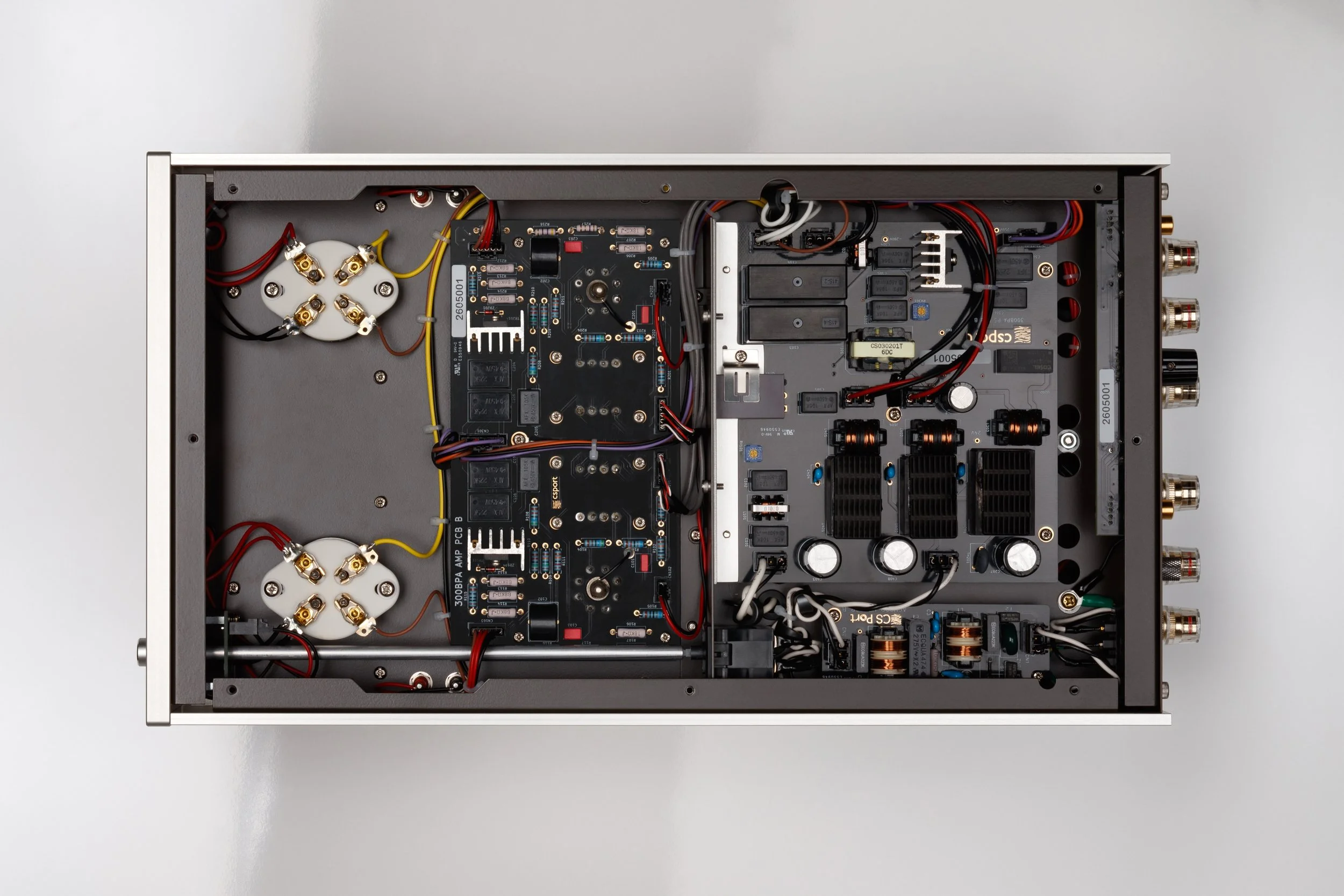
Its deliberately simple amplification circuit is supported by built-in input transformers, substantial output transformers and dual-stage power-supply regulation. Together, these address the foundations of faithful reproduction: low noise, stable operating conditions and the ability to preserve both delicate musical detail and dynamic changes.
Two Levels of Power Supply Regulation
CS Port combines a switching power supply optimised for audio with a subsequent analogue regulation stage. This dual-stage arrangement draws on the company’s extensive experience in industrial power-supply development.
The purpose is to provide stable power while suppressing unwanted electrical noise before it reaches the amplification circuit. It is a modern engineering foundation for a classic output tube.
Quiet Enough for the Fine Details
The 300BPA’s specified residual noise is 20µV A-weighted/180µV unweighted across 20Hz–20kHz.
Reducing background noise helps preserve quiet musical information: the decay of a piano note, the ambience surrounding an instrument and the small changes in phrasing that give a performance its expression. Noise control is therefore central to the design, rather than an afterthought.
Two Stages, No Negative Feedback
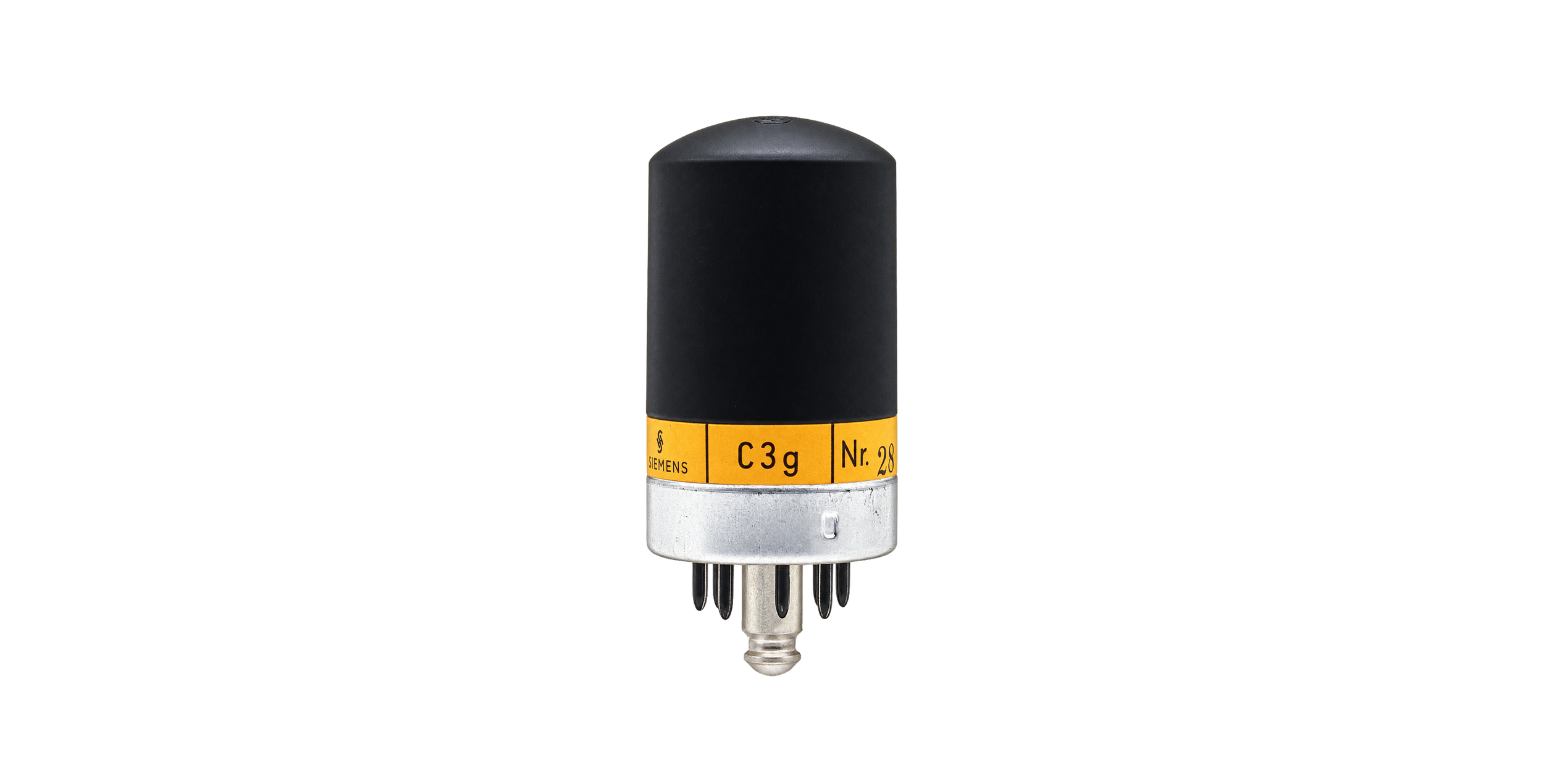
Each channel pairs a triode-connected C3g driver with a 300B output tube. This concise arrangement keeps the number of amplification stages to a minimum, following the same design principle as CS Port’s larger amplifiers.
Selected for its reliability and linearity, the C3g provides the drive required by the 300B. Carefully chosen operating conditions allow the circuit to control harmonic and intermodulation distortion without negative feedback.
Stereo, Dual or Bridged Mono
A rear-panel switch selects three operating modes:
Normal: conventional stereo operation, delivering 9 W per channel.
Dual: both channels use the left-channel XLR input, retaining two 9 W outputs.
Bridge: the amplifier operates as a 20 W monaural unit.
Bridge mode allows a pair of 300BPAs to serve as dedicated left- and right-channel amplifiers.
The amplifier offers separate 4 Ω and 8 Ω output connections and a specified frequency response of 20 Hz–70 kHz, −2 dB.
Type
Class A tube stereo power amplifier with built-in input transformers
Valve Complement
1 × C3g driver, triode-connected
1 × 300B-family output triode
Output Power, Normal / Dual
9 W + 9 W at 5% THD
Output Power, Bridge
20 W mono at 5% THD
Frequency Response
20 Hz–70 kHz, −2 dB
Total Harmonic Distortion
1% at 1.5 W
Negative Feedback
None
Residual Noise
20 µV A-weighted; 180 µV unweighted, 20 Hz–20 kHz
Input Sensitivity
1.2 V
Gain
17 dB into 4 Ω; 20 dB into 8 Ω
Inputs, per Monoblock
1 × balanced XLR
1 × unbalanced RCA
Input Impedance
5 kΩ
Damping Factor
3.35 into 4 Ω; 3.5 into 8 Ω
Mains Supply
100/120/200/240 V AC, 50/60 Hz
Voltage configuration to be confirmed when ordering
Power Consumption
120 W
Dimensions, W × H × D
234 × 200 × 420 mm
Excluding feet, knobs and terminals
Weight
14.0 kg
Included accessory
Rhodium-plated AC power cable
Manufacturer’s Warranty
Five years, excluding consumables such as valves